USDA Home Loan Eligibility Requirements - A Complete Guide
 02.02.2023
The U.S. Department of Agriculture (USDA) offers a mortgage program that is designed to help low- and moderate-income borrowers purchase homes in rural and suburban areas. If you are interested in purchasing a home with a USDA loan, the first step is to determine whether the property you are interested in is eligible for this type of financing.
USDA home loan eligibility requirements are more accessible than many homebuyers realize. If affordability is top-of-mind, understanding what is a USDA home loan and who qualifies can open unexpected doors to homeownership. USDA property eligibility extends far beyond farmland, and income eligibility for USDA home loans can be quite generous, with limits up to 115% of your area's median income.
What is a USDA Home Loan
USDA home loans represent a government-backed mortgage program operated by the U.S. Department of Agriculture, specifically designed to assist homebuyers purchasing in eligible rural communities. The program provides a 90% loan note guarantee to approved lenders, reducing their risk when extending 100% financing to qualified rural homebuyers.
Two distinct loan types fall under the USDA umbrella. The Section 502 Guaranteed Loan Program works through private mortgage lenders who offer 30-year fixed-rate loans to borrowers in USDA-eligible locations. The USDA backs these loans but doesn't issue them directly. In contrast, the Section 502 Direct Loan Program provides subsidized loans funded directly by the government for very low-income and low-income applicants. Direct loans offer payment assistance subsidies that can reduce interest rates to as low as 1%.
Key Benefits of USDA Financing
Zero down payment stands as the most significant advantage. Qualified borrowers can purchase, build, rehabilitate, improve, or relocate a dwelling with 100% financing. This eliminates the upfront barrier that prevents many buyers from entering homeownership.
Interest rates remain competitive because government backing reduces lender risk. USDA guaranteed loans carry no strict credit score requirements from the agency itself, though individual lenders typically look for scores around 640. The program also permits financing for closing costs, site preparation expenses, and essential household equipment like appliances and HVAC systems when conveyed with the property.

Who USDA Loans Are Designed For
The program targets low and moderate-income households seeking homeownership in rural areas. Applicants must be U.S. citizens, U.S. non-citizen nationals, or qualified aliens who agree to occupy the dwelling as their primary residence. Income cannot exceed 115% of median household income for guaranteed loans.
These loans serve families who might otherwise struggle to obtain conventional financing. According to the USDA, providing affordable homeownership opportunities promotes prosperity, creates thriving communities, and improves quality of life in rural areas. While often used by first-time homebuyers, any qualified borrower meeting income and property eligibility requirements can access USDA financing.
USDA Home Loan Eligibility Requirements for Borrowers
Qualifying for USDA financing involves meeting specific borrower standards that extend beyond property location. These requirements encompass income thresholds, credit history, debt levels, legal residency status, and occupancy commitments.
Income Eligibility for USDA Home Loans
Your household income cannot exceed 115% of the area median income (AMI) for guaranteed loans. Income limits vary based on location and household size. Lenders calculate eligibility using adjusted household income from all adult members, even those not applying for the loan. This includes wages, self-employment income, Social Security, child support, and rental income.
Credit Score Requirements
While the USDA sets no official minimum credit score, most lenders require 640 for automatic approval through the Guaranteed Underwriting System. Scores as low as 620 may qualify through manual underwriting with compensating factors. Borrowers below 640 must demonstrate willingness and ability to manage debt through alternative credit sources like rent and utility payments.
Debt-to-Income Ratio Limits
Standard DTI ratios cap at 29% for housing expenses (PITI) and 41% for total debt. Manual underwriting permits ratios up to 32% front-end and 44% back-end when all applicants have credit scores of 680 or higher plus one compensating factor. Strong employment history, cash reserves, or lower housing costs than current rent can justify higher ratios.
Start your mortgage journey with clear guidance and real numbers. See what you qualify for today.
Citizenship and Residency Status
Applicants must be U.S. citizens, U.S. non-citizen nationals, or qualified aliens. Acceptable documentation includes USCIS Form I-551 (Green Card), Form I-766 for refugees or asylees, or Form I-94 with specific annotations.
Primary Residence Requirement
You must occupy the property as your primary residence within 60 days of closing. The home cannot serve as a vacation property, rental, or second home. Exceptions apply for military deployment when immediate family occupies the property.
USDA Property Eligibility Requirements
Properties meeting usda property eligibility must satisfy location, type, and condition standards that protect both buyers and lenders.
USDA Eligible Geographic Areas
Roughly 97% of the country qualifies as eligible territory. You can verify specific addresses using the USDA's online property eligibility map at eligibility.sc.egov.usda.gov. Enter your address like you would in Google Maps, and results display whether the location "IS" or "IS NOT" in an eligible area.
What the USDA Considers Rural
Population thresholds determine rural status. Areas with 10,000 or fewer residents automatically qualify. Locations with 10,001 to 20,000 people qualify if they're outside a Metropolitan Statistical Area and lack adequate mortgage credit for low and moderate-income families. Communities with 20,001 to 35,000 residents remain eligible if they were designated rural before 1990 and still lack sufficient mortgage access.
Property Type Requirements
Single-family homes, condos, townhouses, manufactured homes, new construction, and foreclosures all qualify as usda eligible properties. Condos must appear on approved lists from HUD, FHA, VA, Fannie Mae, or Freddie Mac. The property cannot generate income or serve commercial purposes. There's no maximum acreage limit, but the site must be typical for the area. Barns and outbuildings are acceptable if not used for agricultural business.
Property Condition and Safety Standards
Homes must meet HUD Handbook 4000.1 minimum standards. Required features include structurally sound foundations, adequate roofing, working heating and cooling systems, functional electrical and plumbing systems, and access from all-weather roads. Well and septic systems need inspections valid for 120 days at closing. Properties must provide decent, safe, and sanitary housing verified through appraisal.
How to Check Your USDA Loan Eligibility
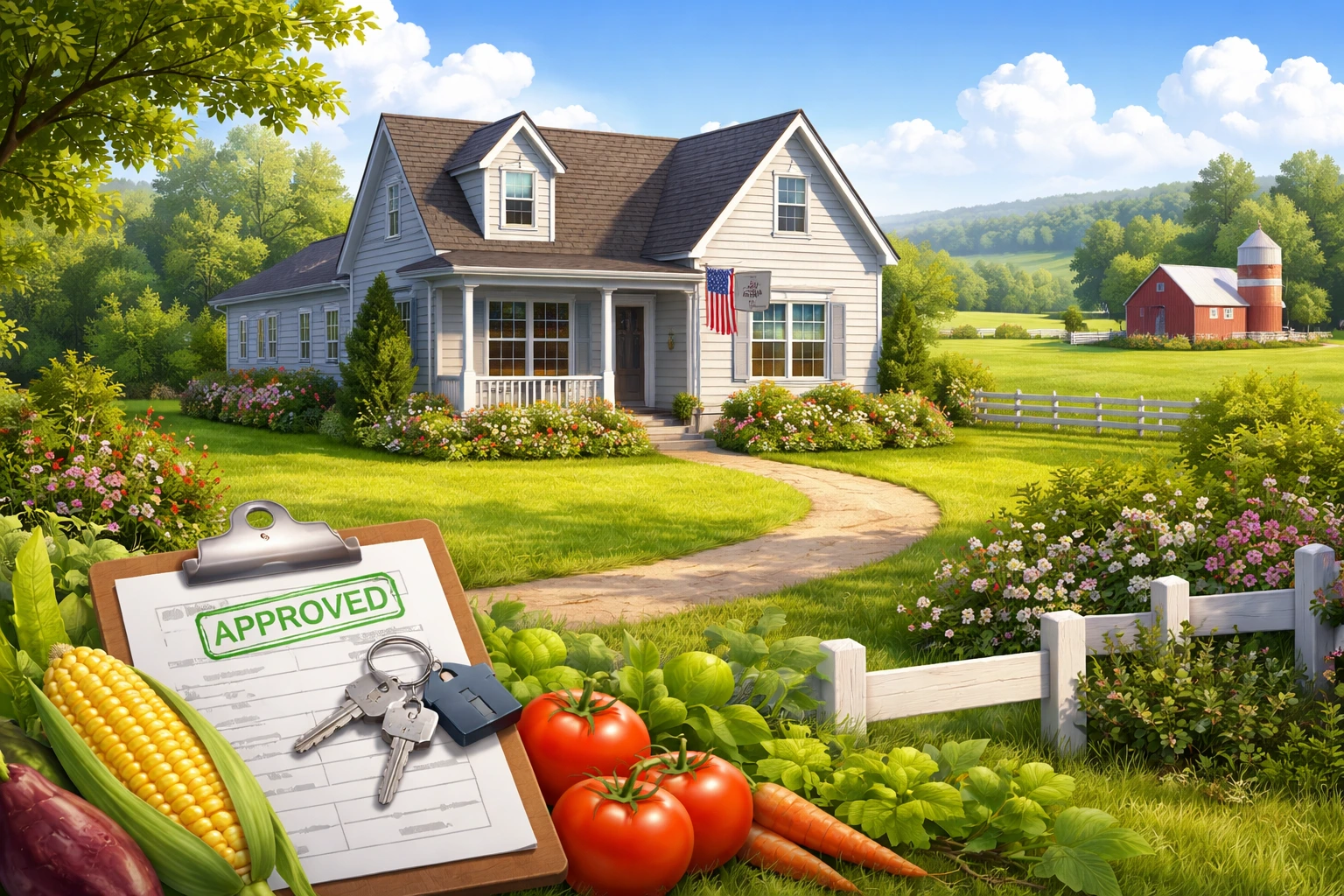
Checking your usda home loan qualifications involves four straightforward verification steps that confirm both borrower and property eligibility.
Verify Your Income Eligibility
To determine if a property is eligible for a USDA loan, you can use the USDA's property eligibility tool. To use this tool, you will need to enter the property's address and select the type of loan you are interested in. The tool will then show you a map of the area and indicate whether the property is located in an eligible area. You'll need recent paystubs, W-2 forms, tax returns with all schedules, and documentation for additional income sources like Social Security or child support. All verification documents must remain valid within 120 days of closing.
Check Property Location Eligibility
Enter your specific property address into the USDA eligibility map to determine rural designation status. The tool provides immediate confirmation whether a location qualifies. Population changes can affect eligibility over time, so verify each property you consider.
Review Your Credit and Finances
Gather credit reports from all three bureaus and compile asset documentation including bank statements and investment accounts. Lenders examine your willingness and ability to manage debt obligations. Prepare verification of rent payments if your credit score falls below 680.
Connect with a USDA-Approved Lender
Contact lenders from USDA's approved network who recently originated guaranteed loans. These lenders serve as your primary resource for eligibility questions and application scenarios. They'll verify your documentation meets usda mortgage requirements and guide you through the approval process.
Conclusion
USDA home loans offer a powerful path to homeownership that many buyers overlook. With zero down payment, competitive rates, and coverage across 97% of the country, you might qualify even if you live in a suburban area. Take the time to verify your income against local limits and check your property's eligibility online. Once you've confirmed the basics, connect with a USDA-approved lender to start your application and turn homeownership into reality.
FAQs
Is it difficult to qualify for a USDA home loan?
Qualifying for a USDA loan is relatively straightforward if you meet the basic requirements. You'll need household income within 115% of your area's median income, typically a credit score of at least 640, and the property must be located in an eligible rural or suburban area. These requirements are often more accessible than conventional loan standards.
What factors can disqualify me from getting a USDA loan?
Common disqualifications include exceeding the income limits for your area and household size, having insufficient credit history or a credit score below lender requirements, and attempting to purchase property in a non-eligible location. Additionally, the home must be your primary residence—investment properties and vacation homes don't qualify.
What property requirements must a home meet for USDA financing?
The property must be your primary residence and meet basic safety and livability standards. It needs accessible entry from a public road with no hazards blocking access, structurally sound construction, functional heating and cooling systems, working plumbing and electrical systems, and adequate roofing. The home must also be located in a USDA-eligible rural or suburban area.
Can I use a USDA loan to purchase property with acreage?
Yes, there's no maximum acreage limit for USDA loans, as long as the property size is typical for the area. However, the land cannot be used for income-generating agricultural business. Barns and outbuildings are acceptable if they're not used for commercial farming operations.
How do I verify if a specific property location is USDA-eligible?
You can check property eligibility instantly using the USDA's online eligibility map at eligibility.sc.egov.usda.gov. Simply enter the property address like you would in Google Maps, and the system will immediately confirm whether the location qualifies as an eligible rural or suburban area.
Start your mortgage journey with clear guidance and real numbers. See what you qualify for today.